

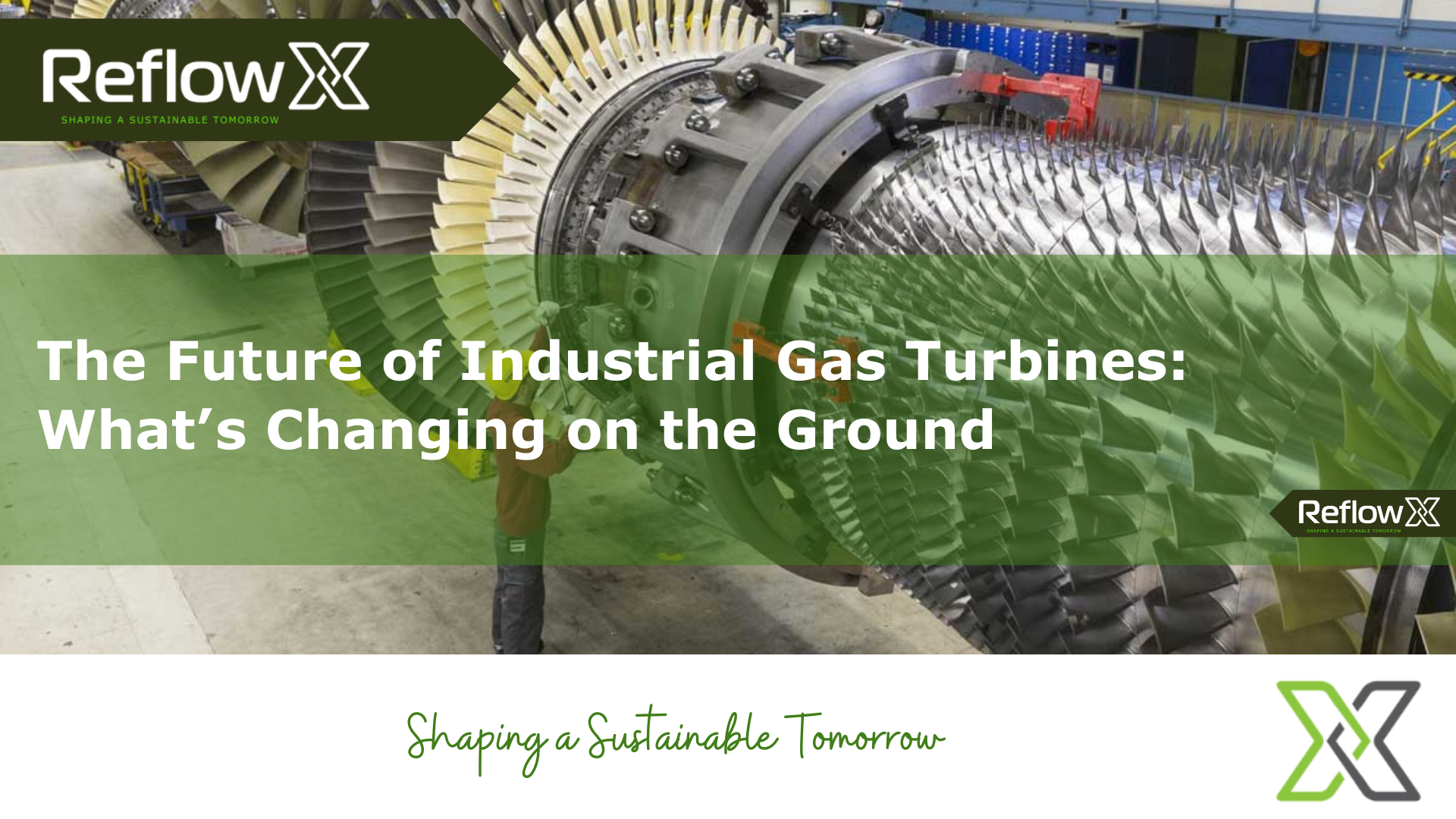
However, considering the daily operations of industries, it will be apparent that there is one requirement that must never be compromised on: the consistency of the power supply. Whether it is a refinery, manufacturing facility, or processing facility, if the power fails, all work comes to a standstill. This is precisely the reason why even today, when all eyes are focused on renewable energy sources, gas turbines continue to play a crucial role in the industrial sector.
This is where things get exciting. While one may argue that gas turbines have remained “relevant” over the years, the truth is much more profound.
Why Gas Turbines Are Still in Demand
In the context of industrial practice, trends are never taken into consideration when making decisions. The solution that stands the test of time is chosen. It is the gas turbine that will remain in high demand in the future since it provides a straightforward approach: reliability and control.
As opposed to solar and wind power, which require certain environmental conditions, the gas turbine can operate whenever necessary and modify its energy generation to match the requirements of the facility. This capability is extremely important in those industries where energy consumption cannot be predicted with precision. In other words, you may not need the maximum energy at once, but when you need it, it must be delivered immediately.
Finally, there is another point that needs to be mentioned. Numerous facilities have been using gas turbines for many years now. Therefore, it would be impractical and expensive to replace them with something else.
What’s Actually Changing
Despite this technological consistency, there have been some changes regarding how these gas turbines are used nowadays.
To begin with, one can mention an increasing demand in turbine efficiency and a decreased demand in greenhouse gases emissions. Firms need to comply with certain ecological requirements; however, they need to be able to preserve their business stability too. As a result, turbine manufacturers started working on creating turbines that would allow achieving better results and would be much less complicated in terms of their structure.
Next, one should note that the number of sectors requiring turbines has increased significantly. Besides such industries as the automotive sector or oil processing, there are new players now, e.g. data infrastructure, which consume a great deal of energy resources.
Finally, one can also state that firms become much more prudent when it comes to investing a lot of money at once. Thus, they start implementing smaller systems first.
Technology That’s Actually Useful
There are many innovations made in relation to gas turbines that might seem insignificant at first glance but actually have a significant impact in practice.
Firstly, the ability to monitor the turbine’s performance became better. With a good monitoring system, one can keep tabs on the machine’s condition and detect any signs of potential failure early enough, thus preventing an accident. This allows minimizing the amount of downtime, which in turn can cost more money than preventive maintenance.
Secondly, there are innovations related to the design of turbines that allow them to operate more efficiently and produce more energy using less fuel. For instance, modern turbines are more efficient when it comes to working at high temperatures. The innovation here is not the machine itself but its ability to perform better in practice.
Lastly, there is research related to the possibility of using mixed types of fuel in the same turbine. This allows partially switching from fossil fuels to renewable sources, such as hydrogen.
Working Alongside Renewable Energy
It is widely assumed that gas turbines and renewable energy systems compete against each other. In reality, however, they can complement each other.
Renewable energy sources are very valuable but unreliable due to unpredictable variations in the energy produced by such systems. There must be something that will help to cover the difference between the required and actual outputs. It appears that gas turbines can serve as effective supplements to renewable energy systems.
Currently, the use of multiple energy sources has become the norm in numerous industries. In other words, companies tend to combine renewable energy and gas turbines. This solution is much more practical than using only renewable energy systems.
Challenges That Can’t Be Ignored
However, this sector is not immune to problems.
As environmental regulations become more stringent, it will be necessary to minimize the emission rates even further, leading to higher costs in terms of research and design.
Supply shortages may occur if the increase in demand exceeds the production rate. As a result, there may be lags in the production process.
Finally, new technologies such as energy storage systems have improved considerably. Although their role in the sector is currently insignificant, they do represent competition.
What the Future Looks Like
However, as far as the future of the gas turbine industry is concerned, nothing too surprising comes up. It appears to be quite practical.
Efficiency gains, improved monitoring capabilities, and greater integration with other energy resources can be expected. Rather than standing alone as a solution, gas turbines would become part of a wider energy system comprising alternative sources and advanced control mechanisms.
The fuel choices could be expanded gradually, with hydrogen gaining traction. Nonetheless, the process would not take place suddenly but rather would be based on logic.
Conclusion
It does not mean that industrial gas turbines are being phased out; rather, they are evolving. As the environment evolves, requirements for energy production also shift, but the core principles remain unchanged.
The key difference is in the approach. Companies no longer need only the power. They need more advanced solutions that would be clean and adaptable to new realities. And gas turbine manufacturers try to meet this challenge incrementally.
If you happen to be in this industry and deal with platforms like ReflowX, learning about these practical nuances can become more useful than following technological trends. Because the future is not about innovation, but adaptation.
 Prev Blog