

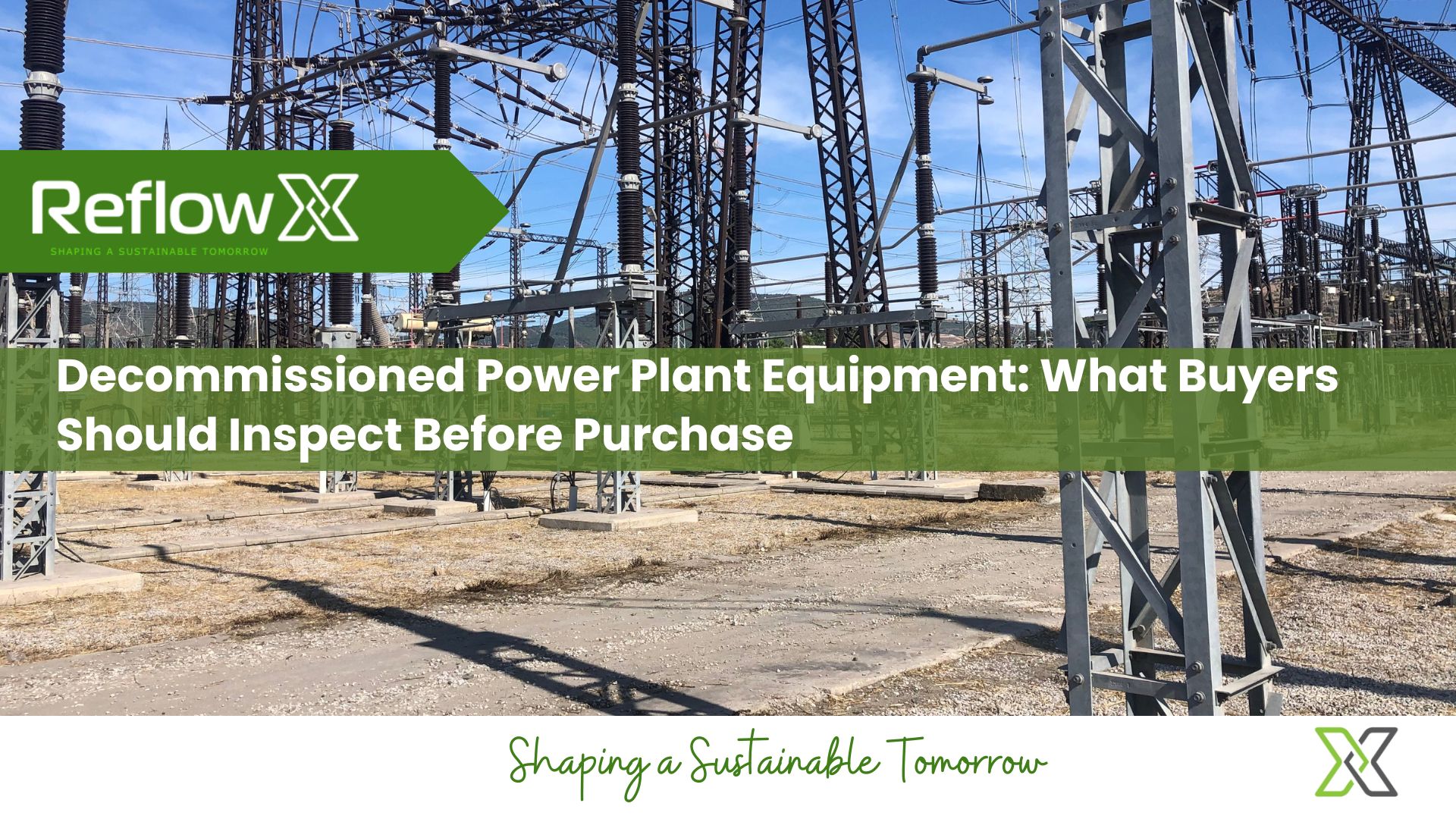
When acquiring used power plant machinery, you need to be careful not of the costs, but of what you cannot see. Even though a machine may look perfect from the outside, there might be something wrong inside – a bow rotor, worn out bearings, corroded windings.
Summing it all up, before buying any decommissioned generator, turbine, transformer or switchgear, you must ensure that you have examined its maintenance records, have done physical and electrical tests, assessed its condition based on how long it was stored, ensured its components are available, and had an independent third party test it.
The following text will explain in detail what needs to be checked when buying decommissioned power plant equipment and in what order. This article is meant for plant operators, EPC contractors, equipment brokers and manufacturers seeking to purchase used equipment for demolition and sale.
Why Does the Secondary Market for Power Plant Equipment Exist?
Decommissioning of power plants has nothing to do with equipment being useless. Early retirement could be caused by switching fuel sources, pressure to comply with regulations, or a corporate merger without the turbine breaking down. This is precisely what makes a good market for reselling of assets and recovery possible.
Utilities often decommission coal, gas, and even nuclear related balance-of-plant equipment long before their useful life ends due to mechanical issues. Those who understand it and know how to distinguish truly good equipment from used up one can purchase functioning turbines, generators, and switchgears at a small part of the initial price.
Short version: Decommissioning of power plants may not be associated with any equipment problems, but rather regulation, financial and market issues, and that is why there are a lot of decommissioned assets that are still usable.
What Should You Check First: Documentation or Physical Inspection?
Documentation comes first, always. A physical inspection without maintenance history tells you the equipment’s current state but not its trajectory and trajectory is what predicts failure.
Before arranging any site visit, request:
- Full maintenance and overhaul logs, including the last major inspection date
- Original commissioning date and total operating hours or starts (critical for turbines, since fatigue life is cycle-dependent, not just calendar-dependent)
- Records of any forced outages, trips, or unplanned shutdowns
- Environmental exposure history was the unit in a coastal, high-humidity, or high-sulfur environment?
- Decommissioning date and storage conditions since shutdown
In the event that maintenance logs cannot be provided by the seller, consider this to be a pricing signal, not a lack of documentation. If there is no record of maintenance, then the equipment needs to be priced and inspected accordingly, since its condition is unknown.
How Should Turbine Resale Inspection Work in Practice?
Turbine resale inspection is where most buyers either save themselves a fortune or walk straight into a costly mistake. Turbines are the highest-value, highest-risk component in almost any decommissioned plant, and their failure modes aren’t always visible.
A proper turbine resale inspection covers:
- Rotor condition check for bow, cracking, and blade erosion using dye penetrant or borescope inspection, not just a visual walk-around.
- Bearing and journal wear measure clearances against OEM tolerances; worn bearings are a leading indicator of shaft misalignment during operation.
- Casing and seal integrity look for distortion from thermal cycling, especially on units that saw frequent start-stop cycling rather than steady baseload running.
- Blade path inspection erosion patterns can reveal water induction issues or long-term steam quality problems.
- Coupling and shaft alignment history request the last alignment report; misalignment accelerates bearing and seal wear disproportionately.
For gas turbines specifically, hot gas path components (blades, vanes, combustion liners) degrade on a fired-hours basis. A unit with low total hours but heavy peaking-duty cycling can be in worse condition than one with more hours but steady baseload service. This is why hours alone are a misleading metric you need starts, trips, and duty cycle together.
Skimmable summary: Turbine resale inspection must go beyond a visual check rotor bore inspection, bearing clearance measurement, and hot gas path condition (for gas turbines) are the three checks that most reliably predict remaining useful life.
What Does a Thorough Physical Inspection Actually Involve?
A physical inspection isn’t a walkthrough with a flashlight. It’s a structured process, and skipping steps is how defects get missed.
As a minimum, an acceptable inspection should include:
- Checking for cracks, warping, and corrosion in housings, casings, and frames
- Insulation resistance (megger) testing of generators, motors, and transformers to identify winding failures before they occur
- Vibration testing when the unit is capable of being turned over because problems with bearings and shafts will usually appear in vibration testing prior to wear being seen
- Sampling of residual oil for metal particles, moisture content, and deterioration of viscosity provides information on previous internal wear
- Corrosion assessment of any components that may have been exposed to moisture either in storage or transportation, especially if the unit was stored outside after decommissioning
- Control system and instrumentation check obsolete or damaged control panels are common on older units and can add significant retrofit cost
Storage conditions after decommissioning matter as much as operating history. Equipment left outdoors, in unheated warehouses, or without desiccant protection for electrical windings can develop moisture-related insulation damage even if it never ran a single additional hour. Ask specifically how the equipment was stored and for how long.
Skimmable summary: A real physical inspection combines visual, electrical, mechanical, and lubricant-based testing and post-shutdown storage conditions can matter as much as years of prior operation, since moisture and corrosion accumulate even in idle equipment.
How Do You Evaluate Power Plant Asset Recovery Value Accurately?
Power plant asset recovery isn’t just about whether a component works it’s about whether it works economically in your intended use case. The same transformer can be a great deal for one buyer and a bad one for another, depending on what they need it for.
Factors that actually move the value calculation:
- Parts availability is the OEM still supporting this model, or will you be sourcing parts from a shrinking secondary market?
- Cost for retrofiting/integration Will the equipment be compliant with the present day standards for emissions, grid integration and safety regulations in your jurisdiction, or do you require expensive alterations?
- Certification validity of pressure vessels/boilers/electric equipment Pressure vessels, boilers and some electrical equipment have certificates that could require renewal before use.
- Transport and rigging cost heavy components like stators and transformer cores can cost more to move than smaller buyers expect, especially for oversized loads
- Scrap floor value knowing the scrap value gives you a real downside floor if the refurbishment doesn’t pan out
Buyers who only compare purchase price against new-equipment cost are missing half the equation. The real comparison is total landed, inspected, and code-compliant cost versus new-build cost and lead time. Decommissioned equipment often wins on lead time alone, since new turbine and transformer orders can carry multi-year backlogs.
Skimmable summary: However, real value in asset recovery will only be had with parts availability, code adherence, and overall landed cost, and savings in lead time is usually the most compelling reason for purchasing decommissioned machinery versus new.
Should You Buy Industrial Teardown Equipment Without an Independent Inspector?
No. This is the step buyers skip most often, usually to save money, and it’s the one most likely to cost them far more later.
Sellers even honest ones have an incentive to present equipment in the best possible light. An independent third-party inspector, ideally one with OEM-level familiarity with the specific equipment class, has no stake in the sale price and will flag issues a seller’s team might reasonably overlook or downplay.
For industrial teardown equipment specifically, independent inspection should also verify:
- That the equipment matches its nameplate data and documented specifications exactly
- That no components have been substituted or repaired with non-OEM parts without disclosure
- That environmental and hazardous material handling (asbestos, PCBs in older transformers, lead paint) has been properly documented and remediated
The cost of an independent inspection is almost always small relative to the purchase price of major equipment like turbines, generators, and large transformers. Treat it as a fixed cost of doing this kind of deal, not an optional extra.
Skimmable summary: An independent, OEM-familiar inspector protects you from optimistic seller assessments and undisclosed part substitutions and for major equipment, the inspection cost is negligible compared to the risk of buying blind.
Buyer’s Inspection Checklist at a Glance
| Category | What to Verify | Why It Matters |
| Documentation | Maintenance logs, hours, trips, storage history | Predicts remaining life better than visual condition alone |
| Mechanical | Rotor, bearings, casings, alignment | Catches fatigue and wear invisible from the outside |
| Electrical | Insulation resistance, winding condition | Prevents in-service winding failures post-purchase |
| Storage | Duration, environment, moisture exposure | Idle equipment still degrades from corrosion and moisture |
| Compliance | Certifications, code compliance, retrofit needs | Avoids surprise costs after purchase |
| Economics | Parts availability, transport, scrap floor | Determines true total cost versus new-build alternatives |
| Verification | Independent third-party inspection | Removes seller bias from the condition assessment |
Frequently Asked Questions
What is the most common mistake buyers make when purchasing decommissioned power plant equipment?
The first and foremost error made is when one depends solely on the appearance of the machine without performing an independent test. The machine could have a number of problems including bowing of the rotor, worn bearings or even dampened windings.
How much can you save by buying decommissioned equipment instead of new? The savings depend on equipment type and condition, but retired equipment, including turbines, generators, and transformers, tends to be sold at prices far lower than those for building new ones, as lead time savings can be equally valuable due to years-long waiting lists for new equipment.
Can decommissioned turbines be safely reused in another facility?
Yes, but on condition that they must first undergo a complete mechanical and electrical inspection, and are compliant with the code applicable to their destination location. The lack of an inspection prior to reuse is where problems arise.
How do you check if a generator has been properly maintained?
Request maintenance and overhaul logs, insulation resistance test history, and records of any unplanned outages. Combine this with a fresh megger test and vibration analysis at inspection to confirm the documented history matches current condition.
Does storage time after decommissioning affect equipment value?
Yes. Extended storage, especially outdoors or without moisture protection, can degrade insulation and cause corrosion even without additional operating hours. Always ask how and where the equipment was stored since shutdown.
Is it worth hiring an independent inspector for a smaller equipment purchase?
For major components like turbines, generators, and large transformers, yes the inspection cost is typically small relative to the equipment value and purchase risk. For smaller ancillary parts, a documented OEM service history may be sufficient.
What documentation should a seller provide before you agree to buy?
At minimum: commissioning date, total operating hours or cycles, maintenance and overhaul records, any outage or trip history, and storage conditions since decommissioning. Missing documentation should be reflected in a lower offer price.
What happens if equipment fails after purchase with no inspection done beforehand? Recourse depends entirely on the sale terms, and most decommissioned equipment is sold as-is with limited or no warranty. This is exactly why pre-purchase inspection matters there’s often little to no remedy after the fact.
Final Thoughts
Buying decommissioned power plant equipment can be one of the smartest procurement decisions an operator or contractor makes but only when the inspection process is treated as non-negotiable. Documentation first, physical and electrical testing second, independent verification last. Buyers who follow that sequence consistently get more from their asset recovery investment than those who chase the lowest sticker price.
If you’re evaluating decommissioned equipment and want a second set of eyes before you commit, ReflowX can help you assess condition, value, and compliance risk before you sign anything.
 Prev Blog