

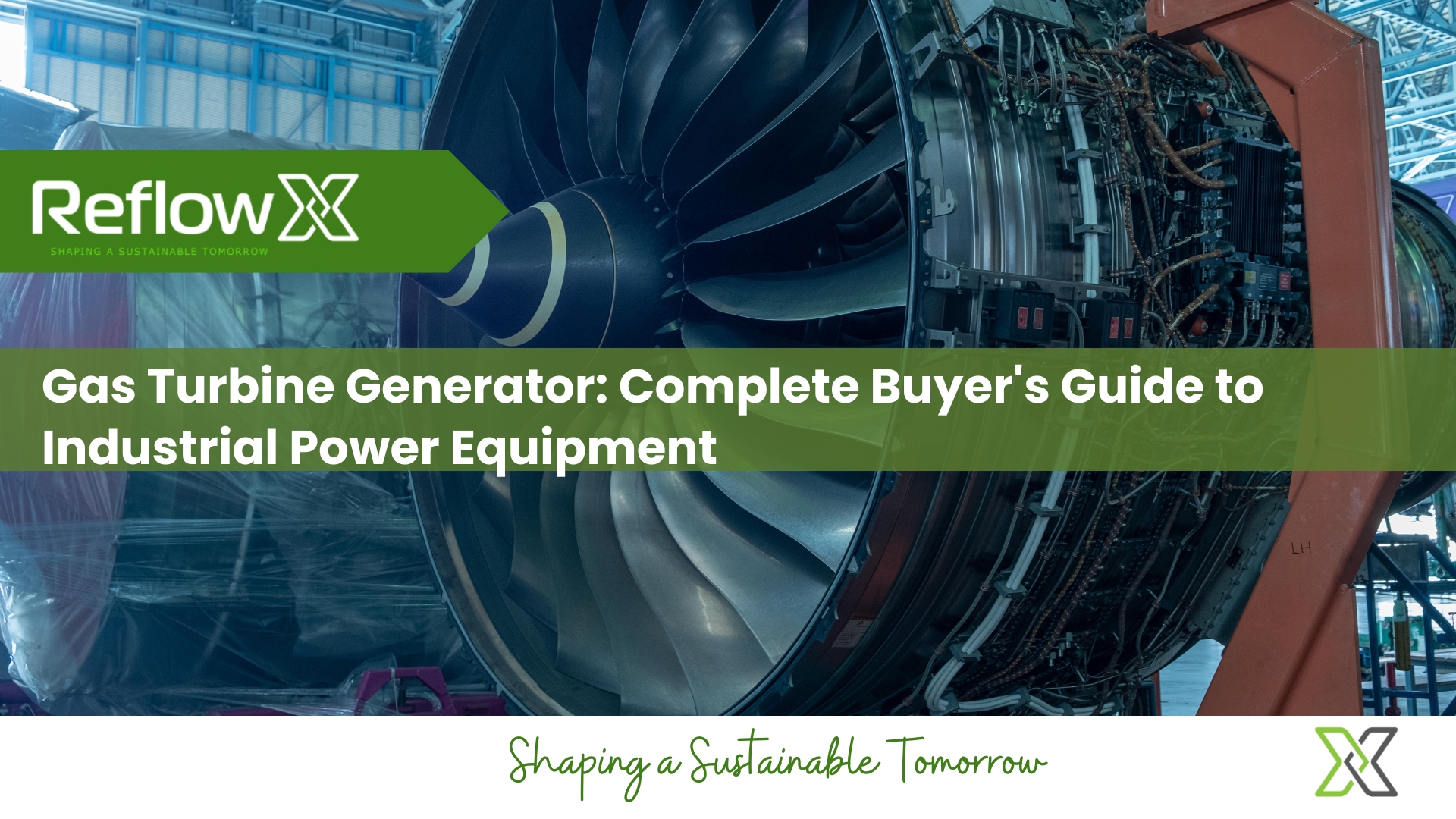
Selecting the appropriate gas turbine generator or power generation equipment is not a one-time task. The sizing of the equipment, its condition, type of fuel used, and the reliability of the equipment provider have a huge bearing on your costs and operation for many years to come. This guide provides a structured approach to help you make the right choice for your needs whether it is a big turbine or diesel generator for sale.
What Is a Gas Turbine Generator and When Should You Use One?
A gas turbine generator is a power generating machine that uses a combustion turbine linked to a generator for transforming fuel such as natural gas or liquid fuel into electrical energy. This system is one of the commonest used in power generation.
- When to use gas turbine generators
- If there is a need for high continuous power generation, usually 1MW and above
- If you require quick startup times during operation
- If you run a combined heat and power (CHP) system or a combined cycle process
- If you work in oil and gas industry, petrochemicals, utilities, or manufacturing industries
In cases where emissions are an issue modern turbines emit much less NOx and CO2 than previous diesel systems
- Technical benefits of a gas turbine generator include:
- Startup time within 10 to 15 minutes in case of aeroderivative units
- Generation capacity between 1MW and 300MW+ based on frame
- Ability to burn multiple types of fuel such as natural gas, diesel, biogas, and syngas
- High power density
Step 1: Define Your Power Requirements Before Reviewing Inventory
Most buyers make the mistake of jumping straight into equipment comparison. That leads to oversizing, undersizing, or buying for the wrong load profile.
Answer these questions first:
- What is your peak load in kilowatts or megawatts?
- Is this a continuous base load or intermittent/backup application?
- What fuel source is available at your site?
- Does the installation need to be permanent or portable?
- What is your load growth forecast for the next 5–10 years?
These answers directly determine which equipment category makes sense.
Step 2: Understand the Four Main Equipment Categories
1. Gas Turbine Generators Large-Scale Continuous Power
Best for: Utilities, oil refineries, LNG plants, large industrial facilities.
When reviewing a gas turbine generator in any inventory, check:
- Operating hours turbines have inspection intervals at 25,000–30,000 hours; know where the unit stands
- Hot section condition combustion liners, transition pieces, and turbine blades wear fastest
- Maintenance records was it serviced by OEM or third-party? Are borescope inspection reports available?
- Capacity rating (ISO vs. site conditions) rated output drops with altitude, ambient temperature, and humidity; always ask for site-derated performance
- Emissions compliance documentation especially for EPA or regional permitting
2. Diesel Generator for Sale Backup and Remote Power
A diesel generator for sale is the most practical option for:
- Emergency backup systems in hospitals, data centers, and industrial facilities
- Remote sites with no grid access
- Temporary power during shutdowns or construction
- Peak shaving in markets with variable electricity pricing
What to check in used units:
- Total run hours and load profile (lightly loaded diesel engines develop glazed cylinders)
- Coolant system condition corrosion is a common failure point
- Fuel injection system service history
- Tier compliance (Tier 4 Final is now the EPA standard in the US for most applications)
- Control panel compatibility with your existing switchgear
3. 2 Megawatt Generator Mid-Range Industrial Applications
A 2 megawatt generator sits in a category that serves medium-sized manufacturing plants, commercial campuses, smaller utilities, and oilfield applications.
At this output level, you are typically choosing between:
- A mid-frame gas turbine generator
- A large reciprocating diesel or gas engine genset
- A steam turbine generator in facilities with available steam
Buyer considerations specific to this output range:
- At 2 MW, both new and used markets are active refurbished units at this size often offer 40–60% savings versus new
- Confirm synchronization capability if paralleling with grid or other generators
- Heat rate (fuel efficiency) matters significantly at this continuous output level even 5% efficiency difference adds up to six figures annually in fuel cost
- Steam Powered Generator for Sale Thermal Integration Applications
A steam powered generator for sale is relevant when:
- Your facility already generates steam as part of an industrial process (refinery, paper mill, chemical plant, food processing)
- You are building a combined heat and power (CHP) system
- You have a waste heat recovery opportunity
Where to find steam turbine generators for sale:
- Refinery and chemical plant decommissioning sales
- Industrial equipment brokers and auctions
- Specialized power equipment dealers
Critical specs to verify:
- Inlet steam pressure and temperature requirements
- Extraction vs. condensing turbine configuration
- Governor and control system condition
- Gearbox condition if the turbine drives a generator through reduction gearing
Step 3: New vs. Used Making an Honest Assessment
Used equipment can deliver genuine value. It can also become an expensive liability. The difference is in how thoroughly you evaluate it.
When used equipment makes sense:
- Project has a defined end date (temporary or contract power)
- Budget constraints are real and significant
- Equipment can be inspected in person or by a qualified third party before purchase
When used equipment is risky:
- Maintenance records are incomplete or missing
- Seller cannot provide inspection access
- The unit has been in storage for more than 2–3 years without preservation maintenance
- Operating hours are high and a major inspection is overdue
For used portable steam generators for sale specifically: Portable steam units are widely used in oilfield operations, industrial cleaning, and plant maintenance. When evaluating used portable steam generators for sale, check burner condition, pressure vessel certification dates, and insulation integrity. A portable steam generator with an expired ASME code stamp requires recertification before use factor that cost into your purchase price.
Step 4: Evaluate the Supplier, Not Just the Equipment
Even technically sound equipment becomes a problem if the supplier cannot support the transaction professionally.
A trustworthy power equipment supplier will:
- Provide complete documentation: nameplate data, manuals, inspection reports
- Allow independent third-party inspection before purchase
- Give clear, honest answers about the equipment’s history and known issues
- Have a track record in power equipment specifically, not just general industrial machinery
Red flags:
- Vague answers about maintenance history
- Pressure to purchase without inspection opportunity
- No references from prior buyers in a similar industry
- Equipment photos that are clearly old or do not match the described condition
Platforms like ReflowX operate as organized marketplaces for power generation equipment, connecting buyers with vetted sellers and providing broader inventory access across turbine, diesel, and steam categories.
Comparison Table: Which Equipment Type Fits Your Needs?
| Requirement | Gas Turbine Generator | Diesel Generator | Steam Generator | 2 MW Generator (any type) |
| Continuous large-scale power | ✅ Best fit | ⚠️ High fuel cost | ✅ If steam available | ✅ Mid-scale fit |
| Emergency backup | ⚠️ Slower cold start | ✅ Best fit | ❌ Not suitable | Depends on type |
| Portable/temporary use | ❌ Not portable | ✅ Widely available | ✅ (portable units) | ❌ Heavy, permanent |
| Combined heat and power | ✅ Excellent | ❌ Limited | ✅ Excellent | Depends on type |
| Low upfront cost | ❌ High CAPEX | ✅ Lower cost | ✅ Used market strong | ✅ Mid-range pricing |
| Low operating cost | ✅ Efficient at scale | ⚠️ Diesel costs variable | ✅ Waste heat = free fuel | Depends on type |
Frequently Asked Questions
What are the applications of gas turbine generators?
Gas turbine generators are utilized to generate electricity in industrial, utility, and oil & gas projects by using natural gas or liquid fuel to power the turbine that drives the generator, with outputs from 1 MW up to over 300 MW.
How many houses can be powered by a generator with 2MW capacity?
A generator of 2 MW capacity can provide electricity continuously to around 1,500 to 2,000 average houses, and in industrial applications, they may be useful for medium-sized industries or oil field facilities.
What are things to consider before purchasing second-hand diesel generators?
Operating hours, maintenance and service record, condition of coolant system, history of fuel injection system, emissions standards adherence, and control panel suitability with switchgear need to be considered.
What are the differences between gas turbine generators and diesel generators?
Gas turbine generators make use of the turbine engine using natural gas for the generation of high power output electricity whereas diesel generators use reciprocating engines.
Under what circumstances can I look at buying a steam powered generator?
Buy a steam powered generator if you currently have process steam generation capability, if you are designing a CHP application, or if there is an opportunity to recover heat from some other industrial process.
Is a used portable steam generator a wise investment?
If properly inspected, yes. Ensure that the pressure vessel is certified under ASME codes (code stamp), as well as checking the burners and insulation quality. You need to include any re-certification costs if the unit has been out of operation for over 2-3 years.
Final Word
The choice to go with a gas turbine generator, a diesel generator for sale, a steam powered generator for sale, or a two megawatts generator is dependent solely upon your needs, fuel availability, location, and real-world financial limits.
Do not base your initial screening on cost alone. It will be much more expensive in the long run if your equipment does not last beyond six months of operation. Know what you need, conduct thorough inspections of the equipment, and deal only with those who have documentation for their products.
Power generating equipment is an investment in the long term.
 Prev Blog