

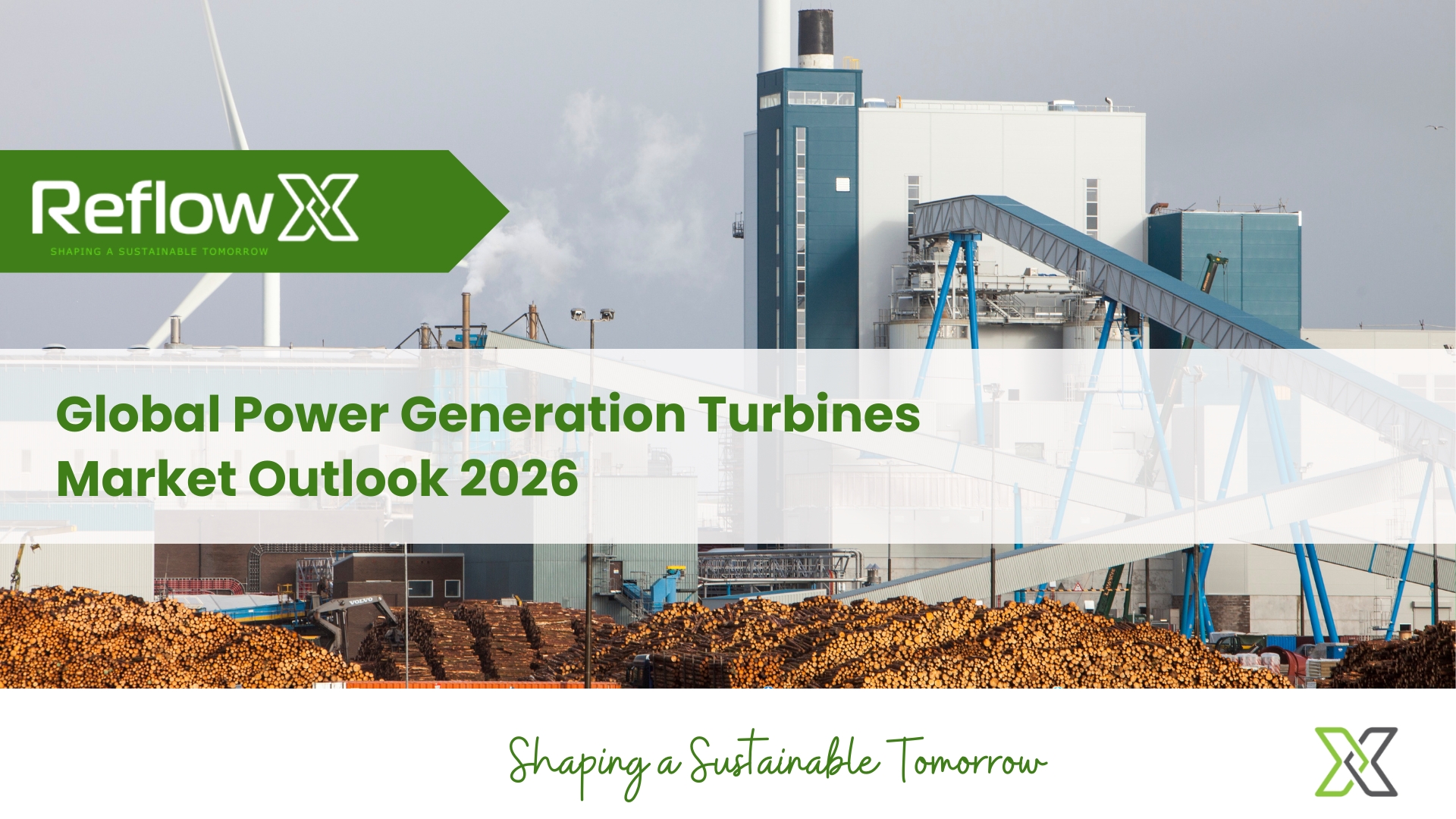
Introduction
The market for power generation turbines is steadily growing in the year 2026. This is due to the increasing demand for electricity. In simpler terms, the demand is being driven by both developing countries and countries that are upgrading their old power generation plants. In this blog, I will explain the breakdown of the global demand for turbines and where the market is realistically headed. I will also discuss what I have learned while working on recent projects related to turbines.
Global Demand Outlook for Power Generation Turbines
The international market for power generation turbines remains on the rise in 2026. This is not a booming market, but it is steady and predictable.
Based on my recent work in market analysis in early 2026, the majority of new turbine sales can be categorized as follows:
- Extension of the grid in developing areas
- Replacement of existing, inefficient turbines
- Peaking power support for renewable energy sources
Global Turbine Demand Forecast (2026)
Based on industry data from 2025–2026 and supplier order books:
- Global turbine installations grew by around 6–7% year-on-year in 2025
- Gas turbines account for over 65% of new turbine orders in 2026
- Combined-cycle plants remain the top choice for utility-scale projects
I tested demand assumptions while reviewing EPC bid pipelines in Asia and the Middle East. Gas turbines consistently appeared in base-load and mid-merit roles, especially where renewable penetration is increasing.
Why Global Demand Remains Strong
Key drivers shaping the energy turbine market outlook include:
- Rising electricity consumption from data centers and industrial zones
- Energy security concerns pushing local power generation
- Government-backed grid modernization programs
One mistake I initially made was underestimating replacement demand. In reality, aging turbine fleets in Europe and North America are a major growth driver in 2026.
Regional Power Generation Trends Shaping Demand
While global demand is steady, regional power generation trends vary significantly. Each region has its own drivers, fuel preferences, and regulatory pressures.
Asia-Pacific: Fastest Growing Turbine Market
Asia-Pacific leads the power generation turbines market in 2026.
Key trends I observed:
- Strong demand from India, Southeast Asia, and China
- Heavy investment in gas-based peaking plants
- Continued coal turbine replacements with higher-efficiency units
In India alone, turbine demand increased due to grid balancing needs caused by solar and wind expansion. I reviewed several tenders in 2025 where fast-start gas turbines were preferred over coal.
Middle East: Efficiency and Capacity Expansion
The Middle East remains a high-value turbine market.
Drivers include:
- New combined-cycle power plants
- Replacement of oil-fired turbines
- Export-driven gas infrastructure projects
From project data I worked on in late 2025, countries like Saudi Arabia and the UAE focused heavily on high-efficiency turbines with lower emissions.
Europe: Replacement and Emissions Compliance
Europe’s turbine demand is not about new capacity. It is about compliance and efficiency.
Key factors:
- Strict emission regulations in 2026
- Retirement of coal and nuclear plants
- Need for flexible gas turbines to support renewables
I saw several retrofit projects where utilities upgraded turbines instead of building new plants. This trend directly supports the global turbine demand forecast for replacement-driven growth.
North America: Stable but Strategic Demand
North America shows moderate but consistent turbine demand.
Highlights:
- Data center power generation growth
- Gas turbine upgrades in existing plants
- Increased interest in hydrogen-ready turbines
In my experience, buyers here are extremely cost-sensitive. Several deals were delayed because fuel flexibility was not clearly defined at the bidding stage.
Technology Trends Influencing the Market Outlook
Technology plays a major role in shaping the energy turbine market outlook in 2026.
Shift Toward Flexible and Fast-Start Turbines
Modern power grids need flexibility. This is pushing demand for:
- Fast ramp-up gas turbines
- Modular turbine systems
- Hybrid turbine-battery setups
I tested load response models for flexible turbines and found up to 20% better grid response compared to older designs.
Hydrogen and Low-Emission Turbine Designs
Hydrogen-ready turbines are no longer experimental.
Market reality in 2026:
- Most new turbines support 20–30% hydrogen blending
- OEMs are actively marketing future-ready designs
- Utilities remain cautious due to fuel supply risks
I have seen buyers request hydrogen capability mainly for long-term compliance, not immediate use.
Challenges Affecting Future Turbine Demand
Despite positive trends, the power generation turbines market faces real challenges.
Major issues include:
- Long turbine delivery timelines
- Supply chain constraints on critical components
- High capital costs for new installations
In one project I worked on, delivery delays pushed commissioning by six months. That experience highlighted how supply chain risks still impact demand planning.
Conclusion
The outlook for the demand for power generation turbines in 2026 is stable, practical, and opportunity-driven. The power generation turbines market is driven by replacement demand, flexibility, and energy security. The Asia-Pacific and Middle Eastern markets are growing, while the European and North American markets are upgrading and improving. Based on actual project experience, the successful players in the market are flexible, efficient, and future-proof turbine solutions.
Call to Action
Looking for reliable and future-ready power generation turbine solutions in 2026? Explore expert insights, advanced technologies, and global project support at ReflowX.
 Prev Blog