

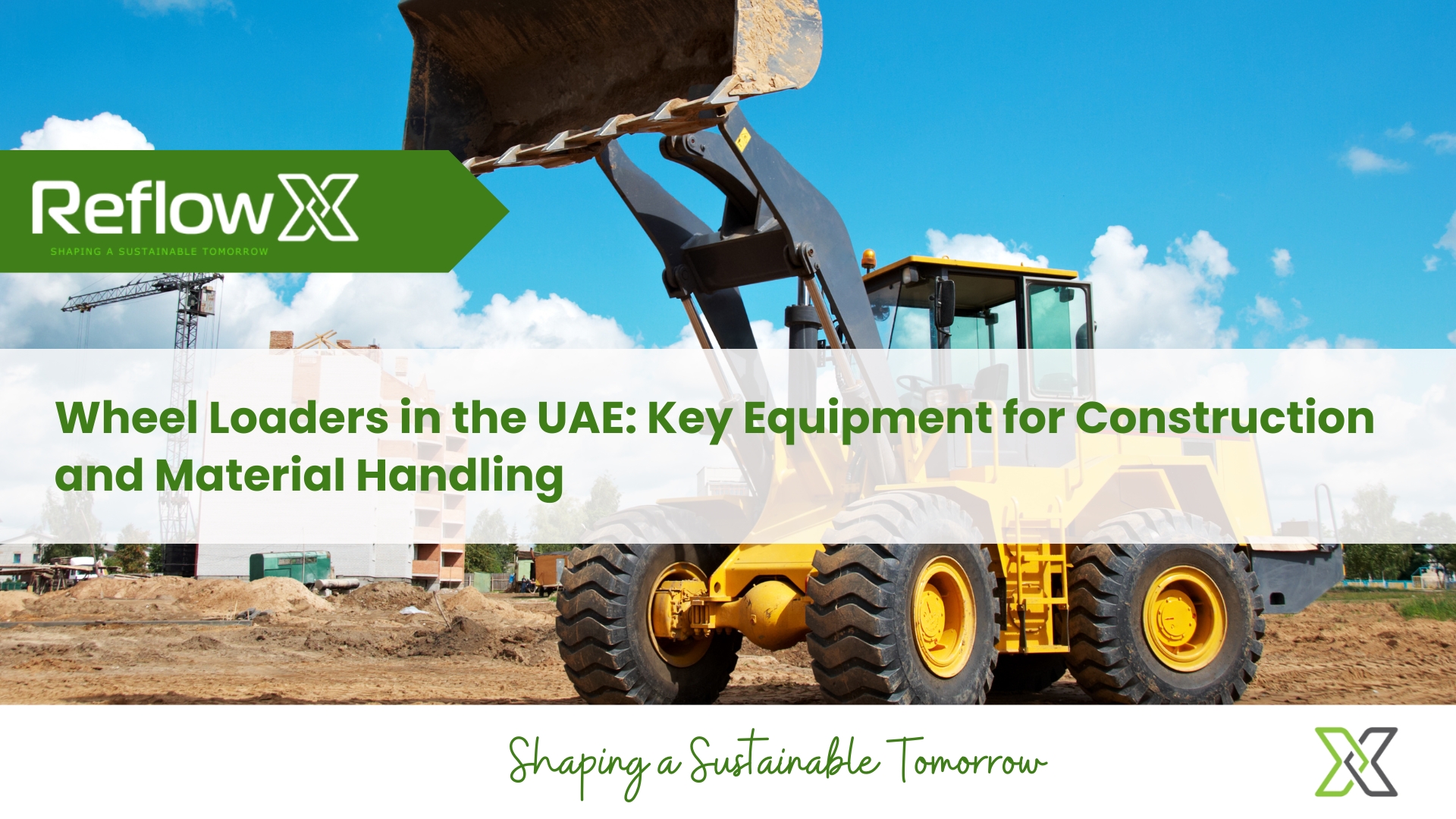
Structures like the Burj Khalifa or the sprawling networks of highways and ports that make UAE sparkle with glitz and gleam in travel photos and videos, didn’t appear by magic. They came from years of coordinated effort on construction sites where the right tools make all the difference. Among all the construction tools, the wheel loader seems to be the most irreplaceable in the context of UAE’s construction and real estate development scene. Whether workers are laying foundations for a new hotel in Ras Al Khaimah or preparing ground for solar panels in the western deserts, wheel loaders handle the heavy, repetitive work that forms the base of it all.
Wheel loaders manage such work better than many other machines because their design focuses on movement and stability. As the UAE keeps pushing forward with plans for greener cities and expanded transport links, these loaders will stay right in the middle of it, helping turn plans into finished work.
In this article, we’ll take a close look at wheel loaders and how they play the instrumental role in the UAE’s real estate and public utility space.
Wheel Loader: The Backbone of UAE Construction
In multiple ways wheel loaders have become the backbone of construction in the UAE over the years. Let’s find out some of these reasons.
- Faster ground coverage: Compared to something like a backhoe, which digs deeper but moves slower, the wheel loader wins out for straight material transfer because it covers ground faster on packed surfaces.
- Ability to maneuver in tight space: That bend in the middle of the frame lets the front end swing left or right on its own, which is a game-changer when you’re working in a spot crowded with half-built walls or supply stacks.
- Low ground pressure: It’s wide tires with their low ground pressure keep the whole thing from sinking into the loose fill that’s common around here, like on the man-made islands off the coast.
- Tested in UAE weather: The weather here adds its own layer of challenge, and wheel loaders are built to push through it. When the sun hits peak in July, engines can struggle if they’re not set up right, but the good ones have extra fans and vents that pull in air from higher up where it’s a bit cooler.
- Built to keep motor cleaner: Dust is the other big enemy; it gets everywhere during those windy spells, and without strong filters, it would wreck the insides quick. Most loaders sold locally come with setups that spin the air to throw out the big particles first, then trap the fine stuff, so the motor stays clean longer.
- Moving load faster: A single wheel loader may move a few hundred tons before lunch, feeding into a bigger effort that ties the economy together. Without machines like these, handling that volume would take forever and cost way more.
- Easy switch between tasks: Wheel loaders can switch between tasks easily, like loading one minute and smoothing ground the next, so you don’t need a whole fleet of specialized gear.
- Easy to fix: Whenever something needs fixing, the parts are laid out in a way that’s easy to reach, cutting down on hours lost to repairs during crunch times.
With the UAE adding more tech to its builds, like sensors in the roads at the new smart districts in Abu Dhabi, loaders are also catching up. Many now have built-in trackers that log how they’re used, spotting things like too much idling so managers can step in early.
JCB Wheel Loader: A Favorite in the Desert
What pulls so many local construction teams in the UAE toward the JCB wheel loader is how it holds up under real pressure. The frames are beefed up to take the constant strain of heaving full buckets, and the joints have enough give to handle bumps from rocky hauls.
Look at the 455ZX model, it’s got 258 horses under the hood from a diesel that’s tuned smooth, and that 4.6-cubic-meter bucket makes quick work of jobs like prepping the underlayer for a new expressway out near Al Ain, where you need steady power without drama.
The desert versions pack bigger cooling setups that keep things from boiling over during long waits in 48-degree heat. The hydraulics adjust on their own to the load, so you’re not burning extra fuel or wearing out lines faster than you should.
JCB has a lineup that covers most needs around here. The 432ZX, with 183 horsepower and room for 3.5 cubic meters, is perfect for the squeeze of city extensions like those around Dubai Creek, where it zips through narrow gaps and has a setting to stretch the fuel further by 15 percent. The 455ZX is the reliable pick for rock pits, letting you swap buckets fast for different loads. And the 467ZX tops it off at 300 horsepower with 6 cubic meters, showing up on huge solar farms like Al Maktoum, lining up feeds just right for the conveyors.
Maintenance Imperatives in Harsh Realms
Heat, grit, and nonstop runs wear wheel loaders fast in the UAE, so staying on top of care is non-negotiable. Filters jam after 200 hours here, not 500 like cooler spots; coolers need blowing out every two weeks. Days mean levels and pulls, hunts for leaks; weeks bring grease jobs, changes, tweaks; months test oils for junk, shakes for spins.
Tools like Volvo’s send heads-up on glitches, keeping costs at 15,000 dirhams a year but adding 20 percent run time. Parts zip from JCB’s hub overnight. Teach crews basics like resets or swaps to shave fix waits.
Future Trajectories: Innovation on the Horizon
Come 2030, most new wheel loaders here will mix gas and electric, like Volvo’s tests at old Expo spots. Hydrogen runs clean at Masdar, and remote steers from cool rooms start in back pits.
Watch for light beams that stop crashes and smarts that catch tired eyes. Rules want half green by 2028, pushing plant-based fuels. It keeps loaders core, shifting to build smart and steady.
Conclusion: Machines That Move Mountains
Wheel loaders anchor the UAE’s rise, from JCB’s tough yellows to operators’ sure hands. They shift the stuff that stacks up to skylines. With eyes on linked towns and green getaways, these rigs and plans keep lifting it all higher.
 Prev Blog